

A Practical Guide to Selecting GNSS Anti-Jamming Solutions for UAVs


2026-10-29 17:35
INFOX | GNSS Technology | October 2026
Unmanned aerial vehicles (UAVs) rely on GNSS for positioning and navigation. However, jamming and spoofing can disrupt satellite signals or provide misleading positioning information.
Choosing the right GNSS anti-jamming solution requires more than comparing antenna element counts. UAV manufacturers and system integrators should consider the operating environment, protection requirements, platform limitations, and system compatibility.

1. Understand Your Operating Environment
Different UAV applications have different navigation requirements, from agricultural mapping and infrastructure inspection to industrial surveying.
Before selecting a solution, consider the UAV’s mission, operating environment, platform type, and required positioning reliability. These factors help determine the protection and integration capabilities needed.
2. Understand Anti-Jamming and Anti-Spoofing
Anti-jamming helps suppress interference that blocks or degrades legitimate GNSS signals.
Anti-spoofing addresses counterfeit or manipulated signals that may mislead a receiver into calculating incorrect positioning information.
These are different functions. Check whether your application requires anti-jamming, anti-spoofing, or both, and review the manufacturer's documented capabilities.
3. Evaluate Antenna Technology and Performance
CRPA (Controlled Reception Pattern Antenna) technology uses multiple antenna elements and signal processing to help suppress interference from particular directions.
However, antenna element count alone does not determine performance. Also evaluate:
Antenna array configuration and system design
Documented interference suppression capability
Supported GNSS constellations and frequency bands
Anti-spoofing functions, if required
Technical specifications and test conditions
Evaluate the complete system, not just the number of antenna elements.

4. Check Size, Weight, Power, and Compatibility
UAVs have strict limits on payload, installation space, and power consumption. Before choosing a product, confirm:
Size and weight: Fit within the platform’s available space and payload budget.
Power supply: Meet the UAV’s power requirements.
Interfaces: Work with the flight controller or navigation system.
GNSS support: Match the required satellite systems and frequency bands.
Environmental suitability: Meet the platform’s operating conditions.
Always check the product datasheet and integration documentation before making a final decision.
5. Match the Solution to Your UAV
Different platforms require different approaches.
Compact and FPV UAVs: Prioritize size, weight, installation space, and compatibility.
Industrial UAVs: Consider the operating environment, navigation requirements, and interference suppression performance.
Platforms requiring dual protection: Verify that both anti-jamming and anti-spoofing functions meet the application’s requirements.
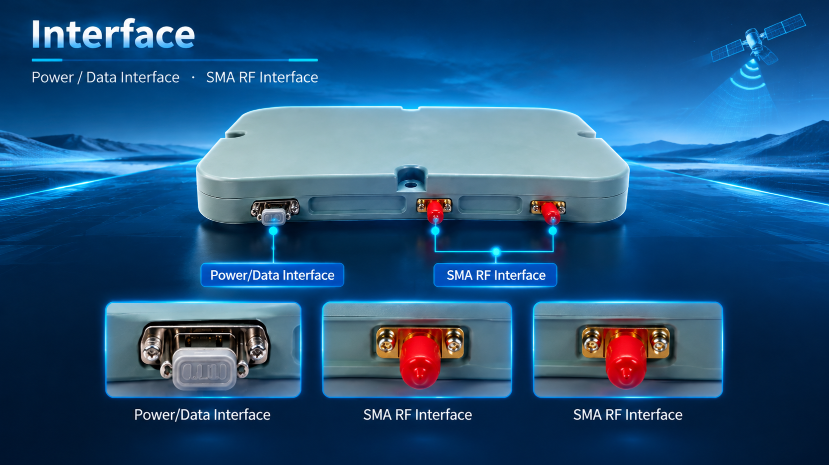
How INFOX Can Help
INFOX offers GNSS-related products, including antenna solutions, boards, chips, and modules for different integration needs.
To help identify a suitable option, prepare your UAV type, required GNSS signals and frequency bands, available installation space, power and interface requirements, and desired level of protection.
Conclusion
Selecting a GNSS anti-jamming solution requires a clear understanding of the UAV’s application, interference threats, technical requirements, and integration constraints.
Looking for a GNSS Anti-Jamming Solution for Your UAV?
Contact INFOX to discuss your requirements and explore suitable options.
INFOX — Reliable Positioning. Resilient Navigation.
Get A Quote
We will contact you within one working day. Please pay attention to your whatsapp.
Contact Us
Add.: B-1408, Zhongdian Great Wall Building, No. 3, Kefa Road, Science and Technology Park Community, Yuehai Street, Nanshan District, Shenzhen,China